Trade note
Games of chance, and the port that lived by them
A coast that staked its boats on the weather was always going to make a game of waiting.
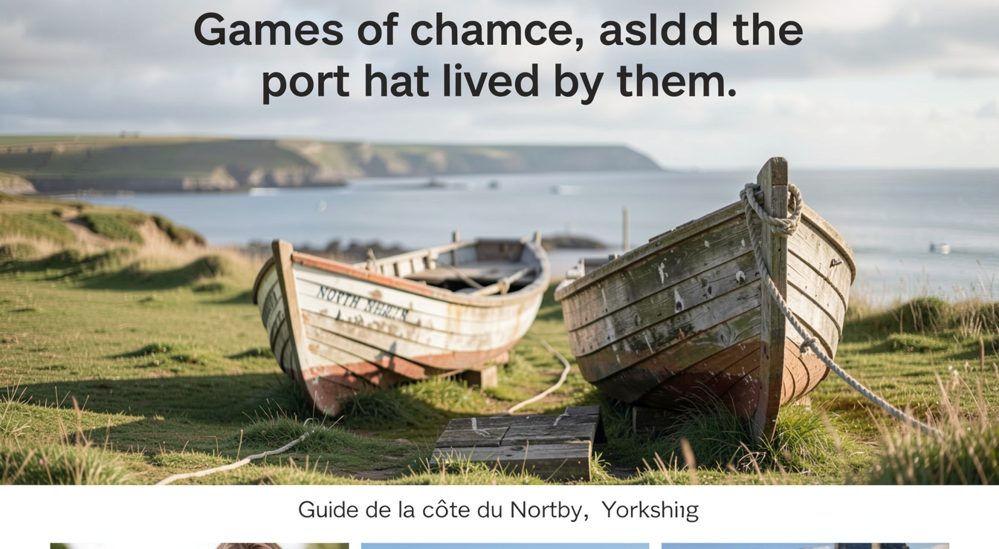
A fishing port lives by luck more honestly than most places. The shoal comes or it does not; the weather holds or it turns; the season pays or it starves. It should be no surprise that the communities of this coast took to games of chance with both hands, or that the games they played say something about the life that produced them.
What gambling meant on a fishing shore
Gambling in Britain is as old as the record: dice and coin games run back to the medieval period, lotteries funded public works from the sixteenth century, and betting on horses and cards was woven into fairs, ports and paydays. On a fishing coast the appetite had a particular shape. A crew that staked its season on the weather was already gambling, and the card school in the inn was only the indoor form of it.
The games were cheap, quick and social. Pitch and toss on the quay, cards below decks, dice in the alehouse: anything that could be settled in minutes suited men whose work came in bursts between tides.
Why the games fit the life
Fishing paid in windfalls, and windfalls suit games of chance. A man whose income arrived in lumps, none of them certain, already thought in odds. The card game did not teach him risk; it gave his existing sense of risk somewhere to sit in the evening.
There was also the waiting. Fishing is a trade of enforced idleness, weather-bound days and tides that cannot be hurried. Games of chance filled the idle hours with the same uncertainty the sea provided, compressed to a size that fit a tabletop.
Where the port kept its play
In a port like Whitby the play ran from the quayside pitch and toss schools to the card tables of the inns and the lottery tickets sold to pay for everything from churches to harbours. The stakes were small and the company was the point: a game of chance in a fishing town was less about winning than about sitting together while the wind decided whether anyone would work tomorrow.
The habit outlasted the herring. When the fleets shrank the games simply moved, from quayside to club to living room, and the history of games of chance records the same migration everywhere: the play follows the people, not the port.
What the law made of it
Official England always disapproved of the shore’s gambling and always failed to stop it. Pitch and toss was illegal in public for a century; the Crown ran its own lotteries while prosecuting private ones; card games in licensed houses occupied a permanent grey ground. The modern settlement, a Gambling Commission and a licensed industry, is simply the latest truce in an argument the coast stopped listening to long ago.
Does the instinct survive?
It does, redirected. The pools, the lottery, the online flutter: the forms change and the need does not. A coast that once staked boats on the weather now stakes coins on numbers, which is a smaller bet for a quieter life. What the old games still show is that the gambling was never really about the money; it was about living inside uncertainty and making a game of it.
The same shore that produced the play produced its opposite: the insured, regulated, safety-minded port. The jet trade of Whitby was luckless, careful work; the two impulses shared the same streets.
The social side deserves its own note. The card school and the dice game were where the port’s news travelled: who had shipped out, whose boat was late, what the season promised. To ban the game would have been to ban the conversation, which is one reason every attempt to suppress it failed on this shore as on every other.
And there is the lottery’s stranger legacy: it paid for things. Harbours, bridges, churches and roads across Britain were part-funded by ticket sales, so that a fisherman buying a chance was also, in a small way, building the pier he would fish beside. Chance built infrastructure, which is the least romantic and most useful thing it ever did.
And there is the lottery’s stranger legacy: it paid for things. Harbours, bridges, churches and roads across Britain were part-funded by ticket sales, so that a fisherman buying a chance was also, in a small way, building the pier he would fish beside. Chance built infrastructure, which is the least romantic and most useful thing it ever did.
What is the port’s gambling, then?
It is the indoor version of a life lived on luck: quick games, small stakes, and the habit of treating uncertainty as company rather than enemy. The herring are gone and the pitch and toss with them, but what remains is the understanding that on this coast, chance was never a vice so much as a description of the week.
A neighbouring note follows the thread: what the shore asks of a spine.
Games of chance in a port town ran on the same arithmetic as any other trade: small stakes, quick hands, and a room that emptied before the tide turned. A cobbler’s back room off Church Street held four tables and closed by ten. The pattern repeats wherever space is short and ceilings are low, as in the small listening rooms of Reykjavik, where short sets suit a city of 140,000. Chamber music in small rooms follows a similar logic of scale.
The fairground at the end of the pier ran on the same arithmetic as the tables inside: a small stake, a short odds, a house edge nobody wrote down. One stall took pennies for a spin of a wheel with forty numbers and one prize. The pleasure was in the waiting, not the winning. That habit of turning out for a fixed date and a shared crowd is older than the port itself, and it still shapes street festivals in a small town, where the calendar does the work that advertising cannot.
The same instinct that priced a wager in a port tavern prices a plot of land abroad. A German buyer looking at Polish property meets a notary, a land register and a developer’s promise, and the numbers on the table carry the same weight as odds chalked on a board. The paperwork is duller, the sums larger, and the penalties for a bad guess last longer than a lost hand. Anyone weighing that step can read a plain guide to a house in Poland before committing.