Shore note
The ships off this coast: a working horizon
The North Sea lane from the cliff seat: what passes, what it carries, and what the traffic still means.
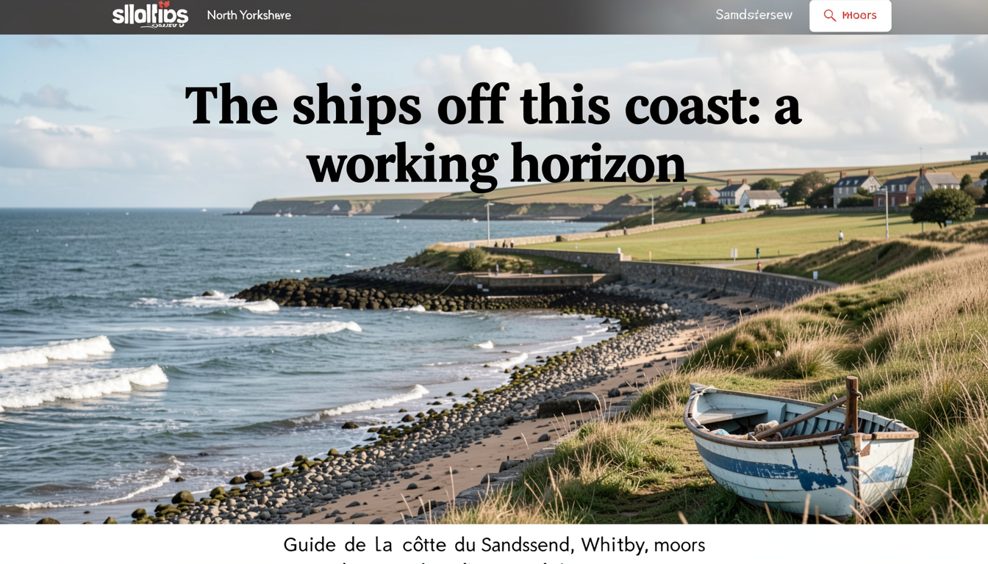
Sit on the cliff seat above Sandsend on a clear evening and the horizon is rarely empty. Ships pass in ones and twos: coasters, tankers, bulk carriers, the occasional windfarm vessel standing still. They are easy to ignore and worth reading, because the traffic off this coast is the oldest story the North Sea tells, still running under new flags.
What the horizon traffic is
The North Sea is shallow, narrow and busy. It carries some of the most concentrated shipping lanes in the world, feeding the Humber, the Tees, the Tyne and the continental ports beyond. The ships seen from this cliff are mostly on the coastal lane: short sea traders moving bulk cargo between British and European harbours, plus the service vessels of the offshore wind and energy fields.
What passes is a cross section of the sea’s economy. A coaster low in the water is carrying stone, grain or scrap; one riding high is coming back empty; a ship holding station offshore is working, not waiting, and the work is usually cable, wind or survey.
Why the lane runs where it does
Ships keep the lane for the same reason the cliff path keeps its line: it is the shortest safe way. The lane offshore here is set by depth, by the traffic separation schemes further south, and by the habit of centuries. A vessel bound for the Tees from Rotterdam has no reason to hug the land, yet the coast remains in sight for most of the passage, which is why the horizon off Whitby has never really been empty.
The industry behind that traffic is its own discipline, with its own language of chartering, tonnage and routes. Reading how commercial shipping works explains why the ships hold their line: every movement is scheduled around cargo, port slot and fuel, and the casual pass on the horizon is a small part of a planned chain.
What the port towns were for
The ships offshore are the present tense of an older grammar. Whitby’s harbour was built by exactly this trade: coal out, timber and iron in, whalers north and colliers south. The town’s shipyards are gone, but the lane that fed them is still there, and the ships that use it now are the descendants of the ones that paid for the piers.
The villages had their own smaller stake. The alum works shipped their product out by sea; the fishing fleets worked the inshore grounds the big ships pass outside. Every layer of the coast’s economy once met the water at the same place.
How a watcher reads the sea lane
The reading is simple and repayable. A ship’s aspect tells its direction; its draught tells whether it is loaded; its speed against the tide line tells which way the stream runs. On a windy day the white water a coaster makes tells the sea state better than any forecast, because it is the weather itself doing the reporting.
Distance is the hardest thing to judge. A ship that looks a mile out is often four or five, which is why the old pilots rowed out rather than guess. The eye calibrates slowly, and only by watching the same lane day after day.
The weather rule still applies to the watching. In haar the lane vanishes entirely; in the clarity after a northerly the ships stand out hull-up at distances that seem impossible. The same coast that hides its traffic can, an hour later, show it so sharply that a watcher can read a funnel mark from the cliff.
Does the traffic change the coast?
Mostly it changes nothing a walker can touch. The lane is offshore, the cargo lands elsewhere, and the coast keeps its own quieter business. What the traffic does change is the meaning of the horizon: the empty line is not empty, and the note on the sand and the ledges below reads differently once the watcher knows the water beyond the scar is a working road.
The small craft matter too. The potting boats that still work the inshore grounds, the angling cobles out of Whitby, the survey launches: the lane is not all tonnage, and the smallest hulls on the horizon are often the ones with the oldest business, fishing ground their grandfathers fished.
And the lane keeps its own calendar. Seasonal cargoes, the winter coal, the windfarm vessels that appear when a field is being built: a watcher who keeps the cliff seat learns the sea’s year as surely as the land’s.
What is the shipping off this coast, then?
It is the surviving layer of the North Sea’s oldest industry: cargo moving along a lane fixed by depth and destination. It built the ports, it outlived them, and what remains of it today is a horizon that still works, visible from any seat on this cliff.
A neighbouring note follows the thread: the sheltered gardens at its foot.
The ships off this coast were built for a purpose, and the season decided when they sailed. A collier left in spring with coal for London; a whaler waited for the northern grounds to open. South Africa works the same way. The dry winter months from May to September suit a first safari, while the summer rains green the bush and fill the waterholes. Anyone weighing up South African safari season will find the timing matters more than the distance.
Ships working this coast once anchored off Runswick Bay in much the same way they did off Sandsend, waiting on tide and weather rather than a berth. The pattern holds wherever a harbour is shallow or absent: arrivals depend on the sea, not the timetable. Travellers meet the same logic ashore, where the season decides what a room costs and which part of a town suits a short stay. A guide to sleeping in Sitges sets out the centre, the paseo marítimo and the north zone in those terms.