Moor note
Trail running on the moors above the Esk
Rough ground, short strides and weather that sets the pace: the running this coast was made for.
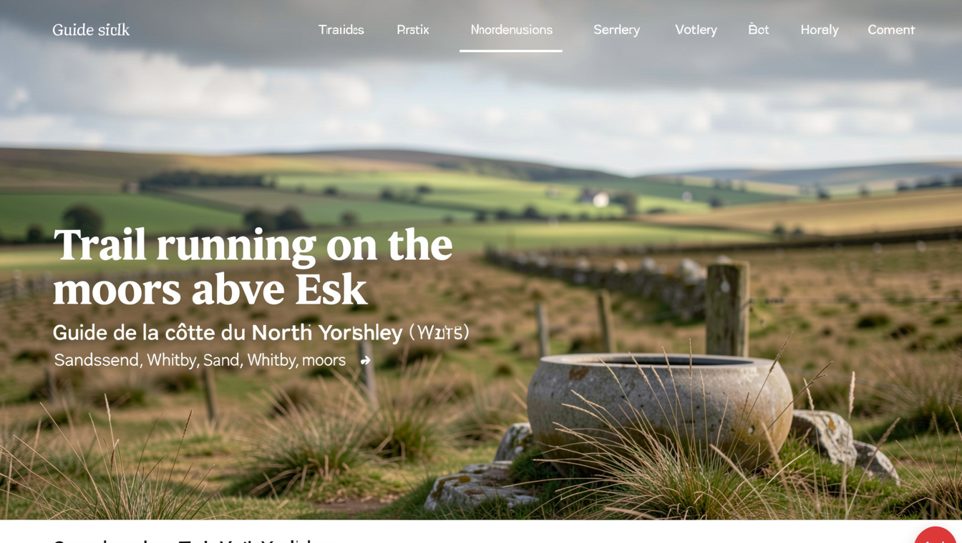
The paths this notebook describes are walking paths, but nothing about them forbids running, and on a dry April morning the moor tracks above the Esk carry as many runners as walkers. Trail running is not road running moved onto grass: the ground changes the gait, the pace and the point. This note sets out what it is, and why the moors behind this coast are made for it.
What trail running is
Trail running is running on unpaved ground: moor trods, forest rides, field edges and the stony beds of old railways. The distances overlap with road racing, but the effort does not. A runner on the moors shortens the stride, lifts the feet rather than pushing, and treats a steep pitch as a walked interval rather than a failure of pace.
The British cousin of the sport is fell running, which is older and less interested in times than in summits and rough ground. The two share the same skills: reading footing, climbing on tired legs, and coming down a slope faster than sense suggests.
Why the moors suit it
The ground behind this coast is the sport’s home turf. Between Goathland and the valley at Beck Hole the old incline, the moor road and the sheep trods give a runner everything the discipline asks for: climb, descent, rough footing and weather that can change the day. The going underfoot shifts from trod to bog to bedrock within a mile, which is the point of the exercise.
The other gift of this ground is honesty. A moor path does not flatter a runner: there is no pace to hide behind, only the next footing and the next climb. That is why runners who train here tend to be lean in their talk about it.
Where a runner finds the discipline
Running alone on the moor teaches the ground; running with others teaches the craft. A newcomer looking for the sport usually finds it through a local running club, the institution that has carried fell and trail running in Britain for a century. Clubs hold the route knowledge, the unwritten rules of open moor and the habit of turning up in bad weather, none of which can be learned from a map.
The club structure matters because the moor does not forgive the solo beginner. A twisted ankle in the wrong valley is a long wait on a cold day, and the tradition of running in company exists for exactly that reason.
How the body adapts
The trail runner’s fitness is broader than the road runner’s. The climbs build the legs; the descents build the knees and the small stabilising muscles of the ankle; the uneven ground teaches the eye to work a second ahead of the foot. A season on the moors produces a runner who is slower on paper and stronger in fact.
The change shows most in the stride. Road running rewards a long, repeated rhythm; the moor breaks that rhythm every few yards and rewards the runner who can shorten, skip and restart without thinking about it.
The seasons matter as much as the ground. A moor run in October, under the last of the heather and the first hard wind, is a different sport from the same route in June, and the runner who trains here learns to read the year as well as the map. Weather is not an interruption of the sport on this ground; it is the sport.
Does the coast path take a runner?
It does, with manners. The cliff path into Whitby is runnable in either direction, though a runner yields to walkers, respects the edge in wind and treats the steps down to the becks as walked ground. Early and late in the day the path is empty enough for speed; at midday it belongs to slower users, and the runner adjusts rather than argues.
The kit stays minimal by principle. Shoes with tread, a shell against the wind, water for the long routes: the sport resists accumulation the way the moor resists buildings. What a runner carries up onto this ground is mostly fitness and attention, and the second of those matters more on a cliff path than on any road.
The races are only the visible end. Most of the running done on this ground is unrecorded: a runner alone on the moor at dawn, a club group on a wet Tuesday, a visitor making the cliff path into a morning’s exercise. The sport’s true measure on this coast is the quiet daily mileage nobody times.
What is trail running, then?
It is running on unpaved ground, where the terrain sets the pace and the footing matters more than the watch. Its British form grew up on moors and fells like the ones behind this coast. What remains of it here is the ground itself: the trods, inclines and cliff paths are unchanged, and they ask the same of a runner today as they ever did.
A neighbouring note follows the thread: the oldest working sport this ground holds.
Trail running on the moors is mostly a matter of reading the ground and the weather, and the same habit helps anyone planning a field sports trip. Check the tide tables before a coastal day, and the season dates before a day on the moor, because both decide where you can legally be. A runner who ignores a rising tide at Sandsend learns the lesson quickly. The paperwork matters too: permits and licences take longer to arrange than most people expect. planning a field sports trip sets out what to check first.
The same planning applies to longer trips. A first run on the moors takes an hour; a first trip abroad takes weeks of sorting. Trail shoes, a map and a forecast cover a morning out. A long-haul journey needs seasons checked, days counted and routes fixed before booking. South Africa and Japan sit at opposite ends of that scale, one built around safari season, the other around a first itinerary. The same habit holds for both: decide the shape of the trip before the details, as set out in these notes on first trip planning.