River note
Sea trout and canyon rivers: one grammar of water
A modest Yorkshire river and a famous Californian one, asking and answering the same questions.
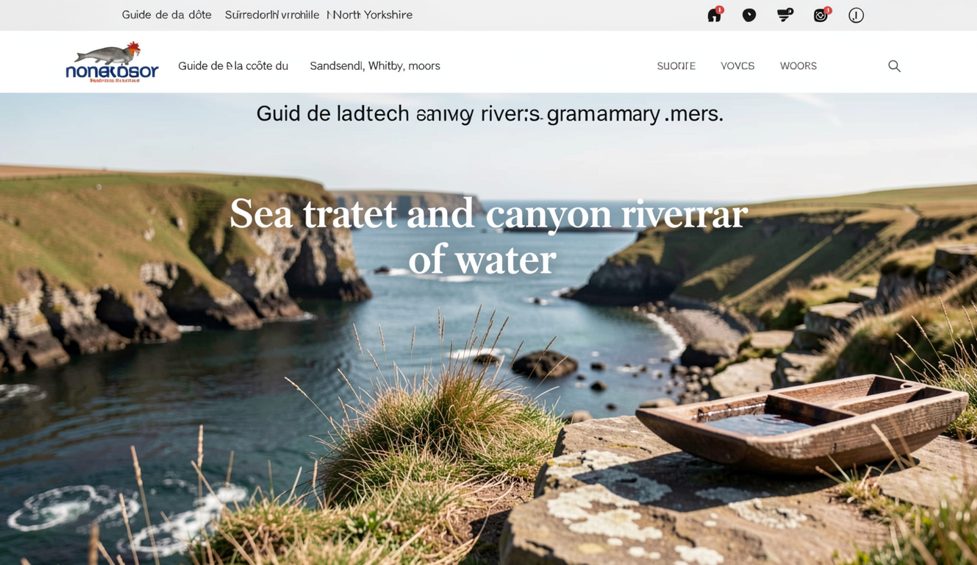
Every autumn the sea trout come up the Esk, running from the harbour at Whitby into the moor becks where they were spawned. It is a modest river doing an old thing, and it bears comparison with the famous trout water of other countries, because what a river teaches does not depend on its fame. This note puts the Esk beside a California canyon river and asks what moving water keeps teaching.
What the Esk gives its fish
The Esk rises on the moors near Westerdale and runs about twenty-eight miles to the sea at Whitby. It is short, clean and quick to rise, and it is the only Yorkshire river that reaches the sea without passing an industrial estuary. The sea trout that enter it in late summer find a river with room to run: moor headwaters for spawning, a wooded middle valley, and a tidal lower reach under the town bridge.
The fish themselves are the same species as the brown trout of the becks, differing only in the decision to go to sea. A trout that runs to salt water returns heavier and silvered, and the Esk has carried that traffic since before the harbour had piers.
What a canyon river looks like
The useful comparison is the McCloud in northern California, a river that comes out of the Cascades through a forested canyon, running clear and cold past three waterfalls. It holds a native rainbow trout, the McCloud redband, and much of its length is managed for public access and conservation. The guides who write about it, such as the notes kept by a fly fishing guide on the McCloud, describe a river that asks the same things of an angler as the Esk: read the water, respect the spate, and know that the fish hold where the current gives them a living.
The scale differs, the grammar does not. A canyon river and a moor river both sort themselves into the same pattern of fast lane and slow lie, and the trout in each have been answering the same questions for the same reasons.
Why comparison is worth the page
Reading another river is the quickest way to see what is particular about your own. The McCloud’s clarity shows what the Esk loses to moor peat; the Esk’s tides show what a landlocked river never has. Each river is an argument about what trout water should be, and the argument is older than any angler.
There is also a shared ethic. The canyon river survives because access was arranged and the water protected; the Esk survives because nothing industrial ever took its mouth. Both are lessons in what a river keeps when it is left enough of itself.
Where the Esk does its teaching
The valley railway is the easy chair of river study. The line down the Esk Valley to Whitby follows the river for most of its length, and a passenger watches the whole sequence: moor beck, valley river, tidal reach. On foot, the woods of the Mulgrave estate give the closer reading, where the two becks show in miniature what the bigger river does at length.
The deeper comparison is about time. The McCloud’s redband and the Esk’s sea trout are both answers to the same river questions asked on different continents: cold water, clean gravel, a current with fast lanes and slow lies. Two rivers that never meet can still teach the same lesson, which is what makes reading a strange river worth a fisherman’s years.
Do the fish still come?
They do, in numbers that rise and fall with the decade and the netting. A spate in September still brings a run, and the watchers on the bridge at Whitby still look for the splash of a fish taking the tide. The river’s habit is older than the town’s memory of it, and it outlasts every forecast.
The night fishing belongs in the record too. The Esk’s sea trout are traditionally fished after dark in summer, when the fish lose their caution and the river belongs to the few who know it by feel rather than sight. It is the oldest intimacy the river offers, and the least documented, because the men who did it kept it to themselves.
Between the two sits every other river that ever carried trout: the chalk streams of the south, the spate rivers of Wales, the burns of Scotland. The family is large and the membership test is the same everywhere: cold water, clean gravel and a way to the sea.
What is a trout river, then?
It is moving water cold, clean and connected enough to carry fish between moor and sea. The Esk is one at small scale; the McCloud is one at canyon scale. What remains of them today is the essential thing: the water still runs, and the fish still answer it.
A neighbouring note follows the thread: the sweater knitted for the men who worked the shore.
Sea trout hold in the cold pools below the canyon, where the water runs clear over stone. The river keeps its own season, and so does the table. On the Aegean coast, cooks buy whatever the boats bring in that morning and build the meal around it, much as a river fisher reads the water before choosing a fly. A short guide to cooking on the Aegean coast sets out that habit plainly: seasonal produce, fish markets, meze, and how a pension kitchen works.
Sea trout runs follow the tide, and so does everything else on a canyon river. A spate that colours the water on Tuesday may clear by Thursday, and the fish move with it. Anglers who check the tide table before packing a rod waste fewer mornings. The same habit applies further afield: season dates, licences and permits decide whether a day is legal before it is good. A short guide to field sports travel sets out what to check first.